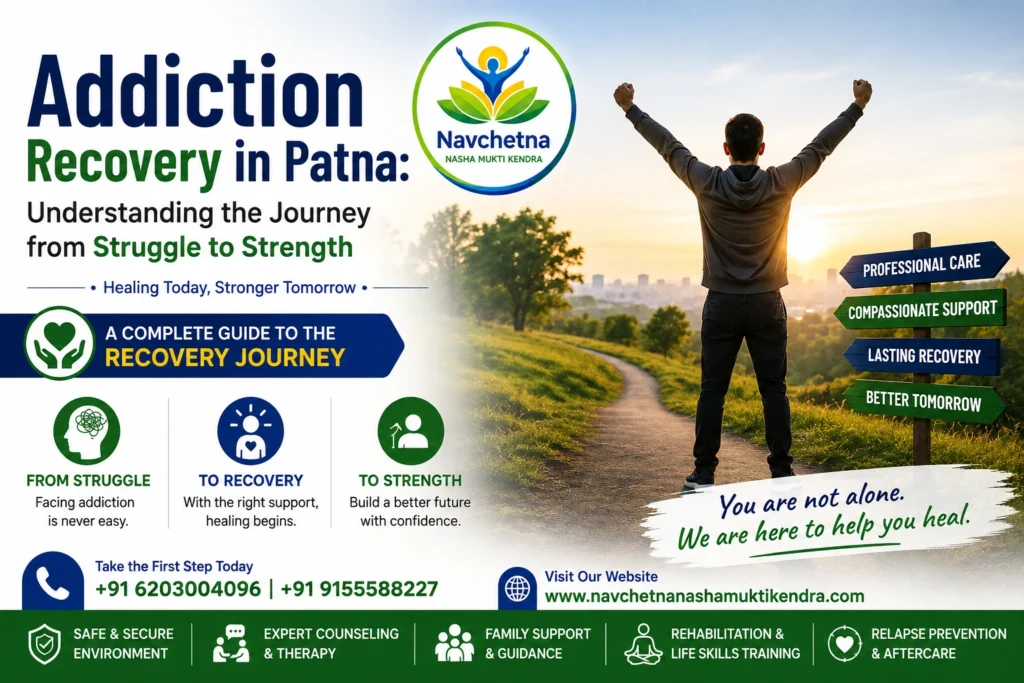
Addiction doesn’t stay in one lane. Give it enough time and it works its way into relationships, jobs, money, self-worth, even the small daily decisions most of us never think twice about. For a lot of families in Bihar, just admitting there’s a problem is the hardest part. Once that happens though, with the right professional support and a bit of patience, people genuinely can turn things around.
Addiction recovery in Patna isn’t a quick fix. It’s not about gritting your teeth through a rough week or two and moving on. Real recovery tends to involve assessment, detox, counseling, behavioral therapy, family involvement, and a proper plan for avoiding relapse down the line. Knowing what this actually looks like in practice makes it a lot easier for families to choose the right addiction recovery centre Patna when the time comes.
What Does Addiction Recovery Involve?
Here’s the thing: there’s no single recipe that works for everyone. Anyone promising a one-size-fits-all fix probably hasn’t spent much time around real patients. Some people genuinely need round-the-clock residential care to steady themselves. Others manage just fine with regular counseling sessions and check-ins once a structured program wraps up.
A solid recovery approach looks at the person as a whole, not just the addiction sitting on the surface. Physical health, emotional state, family dynamics, social circumstances, the specific habits behind the substance use, all of it matters. That’s really the whole idea behind a well-run de addiction centre Patna.
Understanding the Root Causes of Addiction
Nobody ends up dependent on a substance for just one reason. It’s usually a mix, stress, painful experiences from the past, peer pressure, emotional pain nobody’s dealt with, sometimes even the environment a person grew up in.
Good counseling earns its keep right here. A trained counselor helps someone actually name their triggers and understand why they reach for a substance the moment life gets hard. Once those patterns are out in the open instead of buried, building healthier coping habits gets a lot more realistic.
Creating a Personalized Recovery Plan
No two people walk the same path through recovery. The substance itself, how long someone’s been using, their physical condition, mental health background, past attempts at treatment, even what’s waiting for them at home, all of it shapes what actually works.
A well thought out plan usually pulls together medical assessment, one-on-one counseling, behavioral support, group sessions, family education, structured daily activity, and aftercare. The point isn’t to hand someone a generic checklist. It’s to give them steps they can genuinely follow.
Addiction Treatment and Rehabilitation in Patna
A good rehab program gives people a space where they can actually focus, away from the usual distractions and pressures. Families looking into a Nasha Mukti Kendra in Patna should dig into the centre’s treatment philosophy, how qualified the staff really are, what counseling looks like day to day, the living conditions, and what happens after treatment officially ends.
Assessment and Initial Support
Treatment almost always starts with a proper assessment. The clinical team goes through the person’s history with substance use, their general health, mental state, any earlier attempts to quit, and what kind of support makes sense right now.
This step matters more than people give it credit for. It’s how the team figures out the right level of care instead of just guessing and hoping for the best.
Detoxification and Withdrawal Management
Stopping certain substances cold turkey and withdrawal symptoms can range from unpleasant to genuinely risky. Detox is really about helping the body ease back into functioning without the substance it’s gotten used to.
How much medical supervision someone needs comes down to what they’ve been using and their overall health. Detox isn’t identical for everyone, and honestly, any centre that treats it like a copy-paste process is worth being cautious about.
Counseling and Behavioral Therapy
Counseling is, without much argument, the backbone of long-term recovery. It gives people a place to actually talk, about personal struggles, emotional weight, harmful habits, the situations that tend to trigger a relapse before they even realize it’s happening.
Behavioral therapy pushes this further. It helps people catch unhealthy thought patterns as they happen and slowly swap them for something healthier. Given enough time, these become real tools someone can lean on when stress or cravings hit.
How an Addiction Recovery Centre Supports Long-Term Change
A properly run Addiction Recovery Centre Patna does a lot more than just keep someone away from substances for a stretch. It brings together professional guidance, ongoing counseling, daily structure, peer support, family education, and a real plan for what comes next.
Building Healthy Daily Routines
Addiction has a knack for wrecking sleep, eating habits, work, and personal relationships all at once. A structured rehabilitation center in Patna gives people a chance to rebuild those everyday routines, slowly, one piece at a time.
Decent sleep, real meals, some physical activity, meaningful things to do during the day, and regular counseling, together they form the foundation everything else gets built on.
Developing Better Coping Skills
Stress and hard emotions are usually what drag people back toward old habits. Counseling, relaxation techniques, exercise, honest communication, and hobbies all give people something healthier to lean on instead.
Nobody’s aiming to erase every stressful moment from life, that’s just not realistic. The real goal is learning to handle those moments without sliding back into old patterns.
Rebuilding Confidence and Relationships
Addiction tends to leave broken trust, guilt, and a fair amount of isolation in its wake. Recovery gives people room to slowly rebuild their confidence and mend those relationships, bit by bit.
Even small, steady improvements in how someone communicates and shows up add up to something real over time.
Choosing the Best Nasha Mukti Kendra in Patna
Families hunting for the best Nasha Mukti Kendra in Patna should look past the glossy ads and star ratings online. Real quality tends to show up in the small details, not the marketing.
Look at the Treatment Program
Ask straight up whether the centre follows a structured plan that covers both the physical and psychological sides of addiction. Counseling, behavioral support, family involvement, and relapse prevention all need to be part of the deal.
Consider Professional Expertise
A trustworthy de-addiction centre Patna should have properly qualified doctors, counselors, psychologists, and trained staff on the ground. Don’t be shy about asking for their credentials and background.
Check the Environment and Facilities
A clean, calm, genuinely welcoming environment makes a real difference to someone trying to focus on getting better. Families should feel comfortable asking about accommodation, daily schedules, privacy, safety, and what support looks like around the clock.
Ask About Aftercare
Recovery doesn’t end the day someone walks out the door. Ongoing counseling, family support, follow-up visits, and a relapse-prevention plan are what actually help people hold on to their progress once they’re back home.
The Role of Family in Addiction Recovery
Family support can genuinely make or break long-term recovery. At the same time, family members often need their own guidance, since addiction tends to leave behind frustration, fear, mistrust, and plain exhaustion in the people closest to it.
Family Counseling and Education
Family counseling helps relatives see addiction for what it actually is, a complex condition, not a simple lack of willpower. It also improves communication and helps families set boundaries that actually hold.
Loved ones support recovery best by encouraging treatment, holding back on unnecessary judgment, noticing progress when it happens, and keeping the home environment steady.
Relapse Prevention and Long-Term Recovery
Recovery rarely moves in a straight line, and that’s completely normal, not a sign something’s gone wrong. Cravings, stress, social pressure, and old familiar environments can still throw up real challenges even months into solid progress.
Identifying Personal Triggers
People tend to be more vulnerable to relapse during stretches of stress, loneliness, anger, certain social situations, or contact with people and places tied to their past use.
Spotting these triggers early gives someone a real chance to prepare a healthier response before a tough moment actually shows up.
Maintaining a Healthy Lifestyle
A handful of practical habits go a long way in supporting long-term recovery:
- Keeping a regular sleep schedule
- Eating nutritious, balanced meals
- Staying active on a regular basis
- Keeping supportive people close
- Sticking with counseling when it’s recommended
- Steering clear of high-risk environments
- Managing stress through healthy outlets
- Setting small, realistic goals
- Reaching out for help when cravings or emotions get hard to manage
None of these are dramatic on their own. But together, they create structure, and over time, that structure genuinely lowers the odds of slipping back into old patterns.
When Should a Person Seek Professional Help?
Waiting until things get really bad almost always makes recovery harder than it needs to be. Professional help is worth considering as soon as substance use starts becoming hard to control, straining family relationships, affecting work or studies, causing money trouble, or taking a toll physically and emotionally.
Families tend to do better approaching this with patience rather than blame. Shame and criticism usually just push people further away, while honest, respectful conversation tends to actually open the door.
Early intervention gives everyone a real shot at understanding the problem and exploring treatment options before things spiral any further.
Taking the First Step Toward Recovery
Choosing professional help is a big decision, and it’s worth taking the time to gather honest, accurate information before picking a treatment provider. A good rehab program should center on individual needs, professional guidance, counseling, family involvement, healthy routines, and a real plan for the long term.
Anyone searching for a Nasha mukti kendra Patna can speak directly with qualified professionals to figure out what kind of treatment and support genuinely fits their situation.
Navchetna Nasha Mukti Kendra is built around creating a structured, supportive environment where people can work through recovery with real counseling, rehabilitation, healthy routines, and steady guidance behind them.
For families who want reliable health information before making treatment decisions, the World Health Organization (WHO) has educational resources on alcohol use, substance dependence, health risks, and prevention worth reading through.
Conclusion
Addiction recovery in Patna is about a lot more than simply stopping substance use. It means understanding what’s actually driving the addiction, getting the right treatment, building coping strategies that hold up, repairing relationships, and preparing for whatever comes after rehab.
The right treatment environment brings structure, professional guidance, emotional support, and practical skills to the table. Whether someone’s dealing with drug dependence, alcohol addiction, or something else entirely, reaching out for professional help early can genuinely change the trajectory.
Recovery takes time, and no two journeys look alike, not even close. But with patience, the right treatment, steady family support, and real commitment, people can and do move from struggling toward something stable, confident, and worth looking forward to.
Frequently Asked Questions
1. What is addiction recovery in Patna?
It’s the process of helping people overcome substance dependence through proper treatment, counseling, rehabilitation, lifestyle changes, relapse prevention, and ongoing support, all within Patna.
2. How long does addiction recovery take?
Honestly, it depends. The substance involved, the person’s health, how severe the dependence is, past treatment history, and how they’re progressing all play a part. Some people need a structured residential program followed by months of continued support afterward.
3. How can I choose the best Nasha Mukti Kendra in Patna?
Look closely at the centre’s professional team, treatment approach, counseling services, living environment, family support options, individualized care, safety standards, and aftercare before making a final call.
4. Is counseling important during addiction treatment?
Yes, genuinely one of the most important parts. Counseling helps people understand their emotional and behavioral triggers, build coping skills that actually work, make better decisions, and get ready for life after treatment.
5. What should someone do after completing rehabilitation?
Aftercare usually includes continued counseling, family support, healthy daily routines, follow-up visits, support groups, stress-management practices, and avoiding situations that raise the risk of relapse.