Nobody wakes up one day already addicted. It builds slowly, quietly, and by the time family members notice something is really wrong, the substance has already started taking over health, moods, relationships, work, and the person’s sense of who they even are. Occasional use has a way of turning into something the person can’t just walk away from anymore, mostly because the body and brain get so used to the substance that stopping feels almost physically impossible. This is exactly why professional treatment matters so much. Real counseling, actual medical supervision, and an environment built for recovery rather than judgment give people a genuine shot at getting better. A De Addiction Centre Patna gives people organized, professional care for substance dependence and the behavioral issues that usually come along with it. And a good rehab program does a lot more than get someone to stop using. It looks at why the addiction started in the first place, helps the person heal physically and mentally, teaches coping tools that actually hold up under stress, and prepares them for what comes after treatment ends, which honestly is often the hardest part.
So if your family is trying to find a dependable Nasha Mukti Kendra in Patna, it really pays off to understand how the whole process works before you commit to anything. There’s no universal plan here. The right treatment should be shaped around the person’s history with the substance, their current health, what they’re hoping to get out of recovery, and what’s actually happening at home.
What Is a De Addiction Centre Patna?
Simply put, it’s a specialized facility built around one goal: helping people break free from substance dependence through structured, professional treatment. What that looks like in practice varies, but it usually includes some mix of assessment, detox, counseling, behavioral therapy, group work, family sessions, and a plan for staying on track once treatment wraps up.
How De-Addiction Treatment Supports Recovery
Here’s the thing about addiction: it’s rarely just physical. There’s a psychological side too, patterns of thinking and coping that built up over time. So just stopping the substance, on its own, usually doesn’t fix what actually caused the problem.
A solid de-addiction treatment program tends to help someone in a few different ways. It can help them:
- figure out what actually triggers their addiction
- get through withdrawal safely, with real supervision
- build daily routines that support recovery instead of undermining it
- gain better control over emotions and reactions
- work through the negative thought patterns that keep pulling them back
- start repairing communication with family
- recognize the situations most likely to trigger a relapse
- put together a plan that’s actually realistic for the long haul
At the end of the day, it’s about giving someone the tools to live independently and, honestly, just live better.
Why Choose Professional Addiction Treatment in Patna?
Trying to fight serious substance dependence completely on your own is brutally hard, and that’s putting it mildly. Withdrawal, cravings that don’t let up, emotional exhaustion, and pressure from the people around you can make recovery feel almost out of reach.
This is where a professional addiction recovery centre Patna makes a real difference. There’s structure. There’s accountability. And there’s a trained team that actually looks at what a specific person needs instead of running everyone through the exact same routine.
Personalized Treatment for Different Recovery Needs
Two people can use the same substance and still need completely different paths to recovery. How long they’ve used it, their physical and mental health, whatever treatment they’ve tried before, even their home environment, all of it shapes what recovery should actually look like for them.
That’s precisely why De Addiction Centre Patna puts individualized care front and center. Not a checklist everyone gets handed on day one, but a plan that’s actually built around the person and aimed at change that sticks.
Major Stages of De-Addiction and Rehabilitation
Recovery isn’t a single event, it moves through stages, and how long each one takes really comes down to the individual.
Initial Assessment and Treatment Planning
It usually starts here: a close look at the person’s history with substance use, their physical condition, mental state, and what kind of support makes sense going forward.
This stage also catches the things that could complicate treatment down the line. Maybe there’s a history of relapse. Maybe there’s tension at home, or emotional issues nobody’s dealt with yet, or lifestyle habits that just aren’t sustainable. Better to know now than halfway through treatment.
Detoxification and Withdrawal Support
Withdrawal isn’t the same for everyone. For some it’s mild, for others it comes with serious physical or psychological symptoms. Detox is simply the stage where the body gets the chance to readjust after substance use stops.
It has to be handled with care, because severity swings wildly from one person to the next. Whether someone needs closer medical supervision during this phase is really a call for trained professionals to make, not something to guess at.
Counseling and Behavioral Therapy
Counseling is arguably the backbone of long term recovery. It’s where people finally get to sit with, and actually make sense of, the thoughts, emotions, and situations tied to their substance use.
One on one sessions give people a private space to work through personal struggles. Behavioral therapy, meanwhile, helps people spot the patterns that keep tripping them up and slowly replace them with something healthier.
Group Therapy and Peer Support
There’s something about sitting in a room with people who genuinely get it. Group sessions build a real sense of community, and hearing someone else’s story, someone who’s fought the same battle, tends to chip away at the isolation that addiction so often brings.
Group work also sharpens communication, builds confidence, and helps people feel accountable to more than just themselves.
Family Counseling and Education
Addiction never stays contained to one person. It spreads, in a way, leaving family members dealing with their own stress, broken trust, money pressure, and plain exhaustion.
Family counseling gives relatives a real understanding of what addiction actually is and how to support recovery without enabling it. It also opens a door back to healthier communication and, over time, helps mend relationships that took a real hit.
How to Select the Best Nasha Mukti Kendra in Patna
Choosing a rehab centre deserves more effort than skimming an ad or trusting a big promise on a website.
Check the Treatment Approach
What’s actually included in the program? A proper one covers assessment, counseling, behavioral therapy, family support, relapse prevention, and some kind of follow up once treatment is over. If a centre can’t clearly explain its approach, that’s worth noticing.
Consider Professional Support
Doctors, counselors, psychologists, therapists, trained staff, these people are the program, really. Their experience shapes just how structured and effective the whole environment turns out to be.
Looking for Individualized Care
One plan does not fit every person, no matter what a brochure says. Ask, directly, whether the centre actually evaluates each individual and adjusts the plan to fit.
Evaluate the Environment
Is it calm? Clean? Does it feel disciplined without feeling cold? A setting like that helps people stay focused on recovery instead of getting pulled off track by distractions or discomfort.
Ask About Aftercare
Treatment ending isn’t the same as recovery ending. Find out whether the centre keeps offering counseling, family guidance, or relapse prevention support once the person leaves.
Understanding the Role of a Nasha Mukti Kendra in Recovery
A professional Nasha mukti kendra Patna builds a structured space where people can actually get the guidance they need. But let’s be honest, rehabilitation only works as well as the person’s own effort, their family’s support, and their willingness to actually stick with healthier habits once they’re introduced.
Nobody should walk in expecting a quick fix, because that’s not what recovery is. It’s gradual, it has setbacks built into it, and that’s normal. What makes those rough patches survivable is consistent support, from professionals and from family both.
De-Addiction Treatment and Relapse Prevention
Completing a program is a real milestone, no question. But staying in recovery afterward, that’s the part that takes ongoing work. Relapse prevention is really just learning to recognize the situations and triggers that could pull someone back.
Building a Healthier Lifestyle After Treatment
A few habits tend to make the biggest difference here. Sleeping on a regular schedule. Eating properly instead of skipping meals or overeating out of stress. Getting some form of exercise in. Staying away from places and people that feel like a trap waiting to happen. Keeping family close, the supportive kind anyway. Sticking with counseling if it’s recommended, even once things feel stable. Finding real ways to manage stress instead of falling back on old coping mechanisms. And setting goals, personal and professional, that feel achievable rather than overwhelming.
None of this is glamorous. It’s just routine, but routine is exactly what closes the door on a lot of relapse triggers before they even show up.
How Addiction Recovery Can Improve Daily Life
Recovery isn’t only about ending substance use, though that’s obviously the starting point. Down the line, people often notice they’re focusing better, their relationships feel steadier, their confidence starts coming back, and they’ve got some actual motivation to chase goals that once felt out of reach.
If you’re looking into an Addiction Recovery Centre Patna, it’s worth digging a bit deeper to see whether they offer full, long term recovery support, not just help getting through the withdrawal phase and calling it done.
A program that’s genuinely supportive helps people understand exactly what they’re dealing with, gives them coping skills that hold up in real life, and slowly brings healthier patterns back into everyday routine.
Why Early Professional Help Matters
Waiting only gives the addiction more room to dig in deeper. Getting help early makes it considerably easier to name the problem, understand what’s driving it, and start on a recovery plan that actually fits.
Families dealing with this should lead with compassion, not shame. Addiction is a serious condition, and it deserves real professional attention along with a good amount of patience. Encouraging someone you love to seek help is often the hardest step of the whole process, and also the most important one.
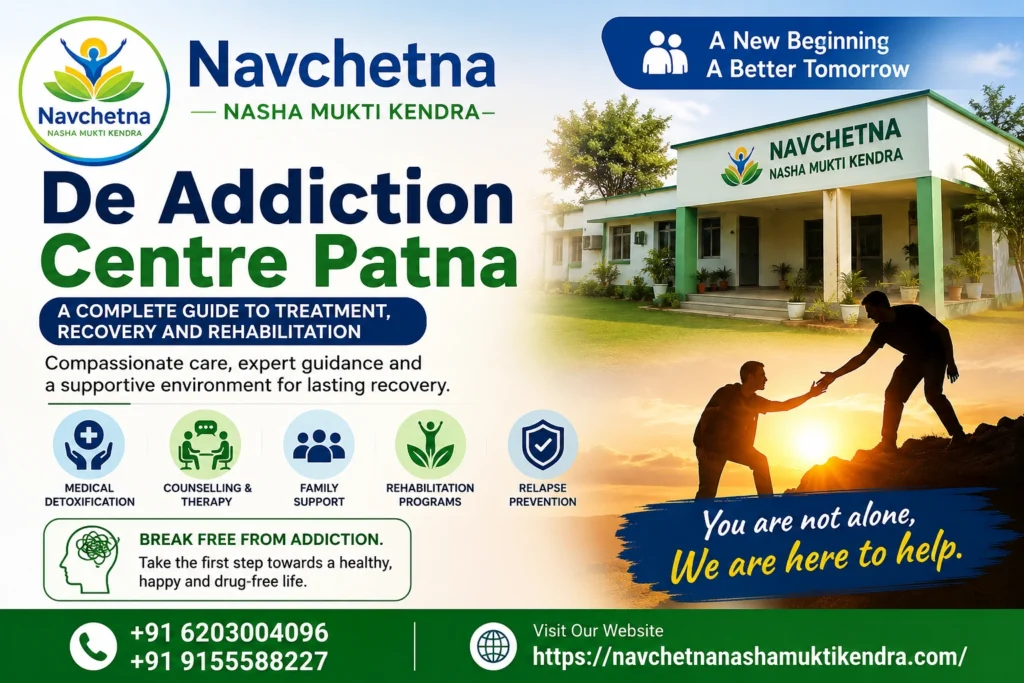
Navchetna Nasha Mukti Kendra offers exactly this kind of supportive environment, built around structured rehabilitation, counseling, recovery guidance, and helping people build habits that actually last.
If you’re looking for the best Nasha Mukti Kendra Patna, take the time to sit down with qualified professionals and talk through the individual’s actual needs before locking in a treatment program.
Reliable Information About Addiction and Recovery
Before deciding on anything, it’s worth checking in with trusted health sources too, not just what a treatment centre tells you. The World Health Organization publishes solid educational material on substance use, the health risks involved, prevention approaches, and treatment options, and it’s a good place for families to build a clearer, more complete picture.
World Health Organization, Mental Health and Substance Use Resources
Conclusion
Finding the right De Addiction Centre Patna really can be one of the most important steps toward beating substance dependence and getting a healthier life back on track. Real rehabilitation is never just about stopping substance use. It weaves together assessment, safe withdrawal support, counseling, behavioral therapy, family involvement, lifestyle change, and a plan to keep relapse at bay.
Take the time to compare treatment approaches, the professionals involved, the facilities themselves, how individualized the care actually is, and what kind of aftercare is on offer. With the right guidance and steady support behind them, people really can build healthier coping mechanisms, repair relationships, and move toward recovery that lasts.
It’s rarely a straight path, and it definitely takes time, but reaching out for help remains one of the most meaningful things a person, or a family, can do.
Frequently Asked Questions
1. What does a De Addiction Centre Patna do?
It provides structured support for people dealing with substance dependence, usually some combination of assessment, detox support, counseling, behavioral therapy, family sessions, and relapse prevention planning.
2. How long does de-addiction treatment take?
Honestly, there’s no single answer. It depends on the substance, how severe the dependence has become, the person’s overall health, any past treatment history, and how they’re responding as recovery progresses.
3. Is detoxification enough to overcome addiction?
No, not on its own. Detox handles the physical side of quitting, but lasting recovery needs counseling, behavioral support, real lifestyle changes, relapse prevention, and continued follow up beyond that.
4. Can family members participate in the recovery process?
Yes, and honestly they should. Family counseling helps relatives actually understand what addiction is, communicate better, and support their loved one properly during and after treatment.
5. How can I choose the right de-addiction centre in Patna?
Look closely at the professional team, the treatment approach, how individualized the care is, the counseling services on offer, the overall environment, family support options, and what aftercare looks like. Then talk it through with qualified professionals before making a final call.